Hinge vs Bumble: Which Dating App Is Better for You?
Structured facts from our service database. Details can vary by country, platform and account.
Hinge
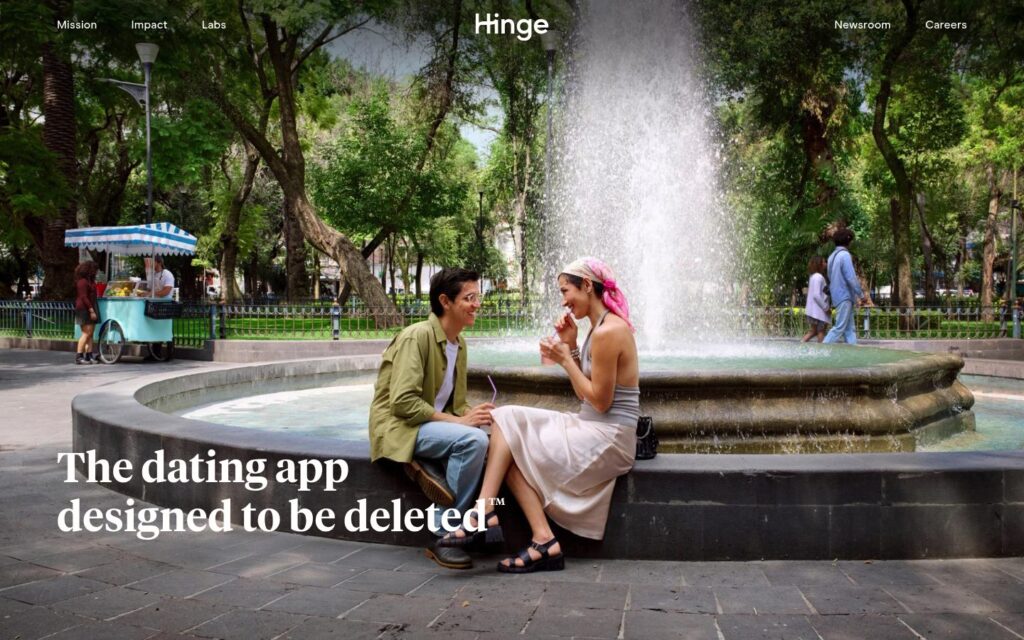
Hinge is a mobile dating service designed for people seeking meaningful connections and relationships. Users create profiles with photos, videos, voice clips, and written prompts, then discover recommended profiles and interact by…

Bumble
Bumble is a dating service for adults seeking meaningful connections, including relationships and dates. Users create profiles, discover suggested people, and swipe to indicate interest. When two people like each other, they…
| Compare | Hinge | Bumble |
|---|---|---|
| Best for | Dating, Meaningful Connections, Long Term Relationship Seeking | Dating, Romantic Relationships, Meaningful Connections |
| Free option | Yes — core access available free | Yes — core access available free |
| Pricing | Free core service; optional Hinge+ and HingeX subscriptions, Boosts, and Roses. Prices vary by location, platform, and billing period. | Free core dating features are available. Optional Boost, Premium, and Premium+ subscriptions plus one-time purchases such as SuperSwipes, Spotlights, and Notes are offered. Current prices vary by plan, duration, package,… |
| Platforms | IPhone, Android | Web, IPhone, Android |
| Matching style | Personalized recommendations informed by profile information, preferences, activity, and interaction behavior | location-aware profile discovery with swipe-based likes and mutual matching |
| Messaging | A match is created after mutual interest; members can like or comment on specific profile content and then message matches | messaging begins after a mutual match; in heterosexual Date-mode matches, women control the first move, while same-gender and non-binary matches can be initiated by either person; Opening Moves can also… |
| Verification | Selfie or Face Check verification is available in supported contexts; users may also report or block accounts | ["photo verification using a selfie and review","optional ID verification using government-issued identification and a live selfie"] |
| Languages | Not fully documented | Not fully documented |
| Availability | Available in selected countries including the United States, Canada, United Kingdom, Australia, New Zealand, India, Singapore, South Africa, Mexico, Brazil, Israel, Turkey, and several European countries. | Available internationally through Bumble's website and mobile apps, subject to local availability, app-store distribution, and applicable laws. |
| Minimum age | 18 | 18 |
We may earn a commission if you join a service through an outbound link. The comparison data and editorial conclusions are kept separate from affiliate payout.
Quick answer: Choose Hinge if you prefer detailed profiles, prompts, and starting conversations around something specific a person has shared. Choose Bumble if you prefer a more traditional swipe-based experience, want access through both mobile apps and a web browser, or value Bumble’s conversation-starting rules in heterosexual Date-mode matches.
Neither app is a universal winner. Both offer free dating features for adults, optional subscriptions and one-time purchases, profile discovery, mutual matching, messaging, and safety tools. The better choice depends on how you like to browse, what you want to learn from a profile, and how much control you want over the first message.
Matching style: prompts versus swiping
How Hinge works
Hinge uses personalized recommendations and profile-based interactions. Profiles can include photos, videos, voice clips, and written prompts. Instead of only deciding whether to like an entire profile, members can like or comment on a particular part of someone’s profile.
This design gives users a natural starting point for conversation. A comment about a prompt, hobby, or photo can feel more specific than a general greeting. Hinge may suit people who want to show personality through written answers and who prefer a slower, more intentional browsing style.
How Bumble works
Bumble centers on location-aware discovery and swipe-based likes. When two people like each other, they can match and chat. In heterosexual Date-mode matches, women control the first move. Same-gender and non-binary matches can be started by either person.
Bumble also includes Opening Moves, which can give people an additional way to begin an interaction. Its format may suit daters who want a familiar swipe experience and a clear structure around who starts the conversation.
Which app is better for relationships?
Both services are positioned for dating and meaningful connections, and both can be used by adults seeking relationships. Hinge’s profile prompts and comments may appeal to people who want to communicate intentions and personality before meeting. The app’s database profile specifically emphasizes meaningful connections, long-term relationship seeking, and conversations beyond photos.
Bumble also supports relationship-minded dating, while its broader positioning includes romantic relationships, meeting people, friendship, and casual dating. That may make Bumble more flexible for users whose goals vary, although the experience still depends heavily on the local member base and how people describe their intentions.
Practical decision: Hinge may be the closer match for intentional, relationship-focused dating with more profile detail. Bumble may be preferable if you want relationship options alongside broader social discovery or casual dating.
Free features and messaging
Both apps have free tiers, so you can create a profile and use core dating functions without immediately subscribing.
Hinge’s free experience
- Create a dating profile.
- Browse recommended profiles.
- Send likes.
- Match and message.
- Use the core dating experience on iOS or Android.
Hinge’s free experience is centered on recommendations, likes, profile content, and conversations. Some additional interaction and discovery controls are reserved for paid plans or one-time purchases.
Bumble’s free experience
- Browse suggested profiles.
- Swipe and match.
- Send messages after matching.
- Use selected search and profile tools.
- Use voice and video calls.
- Access photo verification and block or report tools.
Bumble’s free core features cover the basic cycle of discovery, matching, and conversation. The exact selection of free tools can vary by location, account, and product update.
Messaging differences
On Hinge, members can like or comment on a specific photo, video, voice clip, or written prompt. A mutual match then allows the pair to chat in the app. This can make the initial interaction feel more connected to the person’s profile.
On Bumble, a mutual match also enables messaging, but the first-message rules depend on the type of match. In heterosexual Date-mode matches, women control the first move. Same-gender and non-binary matches can be initiated by either person. Bumble also supports in-app voice and video calls without requiring users to share a phone number.
If you strongly prefer replying to a thoughtful profile detail, Hinge may feel more natural. If you prefer a defined first-move structure or want voice and video calling within the app, Bumble may have the advantage.
Verification and safety tools
Both services provide tools intended to help users manage interactions, but no verification system guarantees that every profile or conversation is genuine or safe.
Hinge may offer selfie or Face Check verification in supported contexts. It also provides reporting and blocking tools, safety and dating guidance, scam-prevention guidance, and privacy controls.
Bumble lists photo verification and optional ID verification using government-issued identification and a live selfie. It also provides block, report, and unmatch controls, in-app voice and video calls, image-blurring features, and a Share Date safety feature. Availability of individual tools can vary by region and account.
For either app, use verification as one signal rather than proof of identity, move at a comfortable pace, avoid sending money, and arrange first meetings in public places.
Platforms and availability
Hinge is a mobile-first service available on iOS and Android. Its database profile does not list web access, so people who prefer using a desktop browser may find Bumble more convenient.
Bumble is available through iOS and Android apps and a web browser. Both services have international availability, but country access, app-store distribution, features, and local member activity can vary.
Pricing and paid features
Neither app’s supplied database profile provides a single universal price. Current costs can vary by country or market, platform, subscription duration, billing period, package, and account. Check the price shown inside the relevant app or service before purchasing.
Hinge paid options
Hinge offers Hinge+ and HingeX subscriptions, along with optional purchases such as Boosts and Roses. Paid features may include unlimited likes, viewing incoming likes together, advanced filtering preferences, enhanced recommendations, priority likes, and added visibility controls.
Bumble paid options
Bumble offers Boost, Premium, and Premium+ subscriptions, as well as one-time purchases such as SuperSwipes, Spotlights, and Notes. Paid features may include unlimited likes, seeing who has liked you, advanced filters, Travel Mode, Incognito Mode, Backtrack, Extend, Rematch, and additional visibility or interaction tools.
Subscriptions may renew automatically unless canceled according to the applicable store or service settings. Deleting an account does not necessarily cancel an active subscription, so check billing settings separately.
Who should choose Hinge?
- People who prefer detailed profiles with prompts and personality cues.
- Daters who want to comment on something specific before chatting.
- Adults seeking meaningful connections or long-term relationships.
- People who prefer a mobile-only dating experience.
- Users looking for an alternative to a heavily swipe-centered format.
Who should choose Bumble?
- People who prefer familiar swipe-based discovery.
- Women who appreciate greater control over initiating conversations in heterosexual Date-mode matches.
- Same-gender and non-binary daters who want flexible conversation-starting rules.
- Users who want iOS, Android, and web access.
- People interested in dating alongside broader social discovery options.
- Daters who value built-in voice and video calling and multiple verification tools.
Final decision
Choose Hinge for a more profile-led, conversation-oriented experience built around prompts, comments, and relationship-minded dating. Choose Bumble for swipe discovery, web access, flexible match types, and a defined first-move structure in heterosexual Date-mode matches.
Both are worth considering as part of a wider search for the right service. Browse more dating services, compare each app’s Hinge profile or Bumble profile, or use Find your dating site to explore options by dating goal and audience.